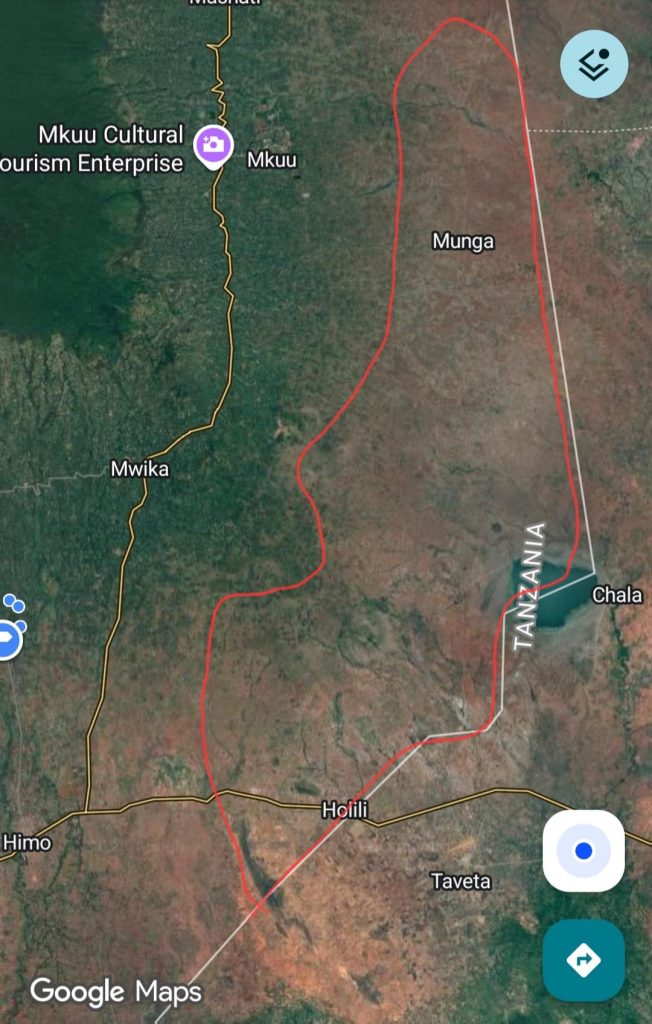
This is a newly funded project that will start in January 2027 and will run till December 2030 in the southern lowlands of Rombo. The project has three major components:
1. Forest Gardens (FGs)
Forest Gardens bring about a profound transformation of farming systems. Through this approach, 300 farmers — more than half of them women and including vulnerable groups, together with their families — will transform their open farms into diverse production systems combining trees, crops, livestock and beekeeping. This enables year-round production, increases incomes, and improves soil fertility, water retention, biodiversity and microclimates.
2. Farmer Managed Natural Regeneration + (FMNR+)
Farmer Managed Natural Regeneration (FMNR), also known as kisiki hai (restoration of tree cover from naturally occurring seedlings and tree stumps), will be combined with soil and water conservation (SWC) methods (e.g. mulching, terracing and sunken beds) and biomass-producing trees such as Gliricidia. This combination, which we call FMNR+, is a low-input approach that supports large-scale restoration of farmland.
Twenty-four high-performing Forest Garden farmers, referred to as champion farmers, will use their own farms as model Forest Gardens and train people in their surrounding communities. Through this approach, approximately 5,000 neighbouring households will be reached, enabling them to restore tree cover on their farms and improve soil and water conditions.
3. Youth engagement
Young people, many of whom are landless or unemployed, will be actively engaged in restoring tree cover on communal lands, including areas belonging to churches, mosques and schools, as well as grazing lands. They will use the kisiki hai technique and engage in vegetable and seedling production, strengthening both environmental stewardship and livelihood skills.
Together, these approaches improve the diversity and availability of food, increase incomes, restore ecosystems and strengthen climate resilience.
In addition, microfinancing will enable farmers to invest in their farms, while an inclusive approach strengthens the participation and leadership of women, youth and vulnerable groups, contributing to greater equality.
Multiple expected results:
Results include increased food availability and diversity, higher incomes, improved soil and water cycles, enhanced tree cover and biodiversity, and better adaptation to extreme weather. Beneficiaries gain knowledge and skills and are further empowered by the integration of microfinancing for sustainable livelihoods.
Targeting vulnerable groups:
The project particularly advances women’s, youth’s and vulnerable groups’ participation and influence in agricultural and environmental activities.
Spreading the Forest Garden and FMNR concepts:
FGs, FMNR, and soil conservation practices spread beyond the project area via interns, networking, and participation in national learning and policy forums aimed at integrating these practices into agricultural support systems.
Implementers and the donor
The project is implemented by KIMAS (Tanzanian NGO, KITOVU CHA MAENDELEO SAFI, kimas-masasi.or.tz) and Liana (Finnish NGO, liana-ry.org), in collaboration with local government extension services.
The project is funded by the Ministry for Foreign Affairs of Finland.
Project team
Staff and collaborators:
- Project Officer (Forestry)
- Project Officer (Horticulture)
- Assistant Project Officer
- KIMAS Technical Programme Manager
- 3-4 short-term interns per year (Tanzanian)
- Liana Coordinator
- Government extension officers
- Community trainers (24)
- Local farmer groups and youth groups